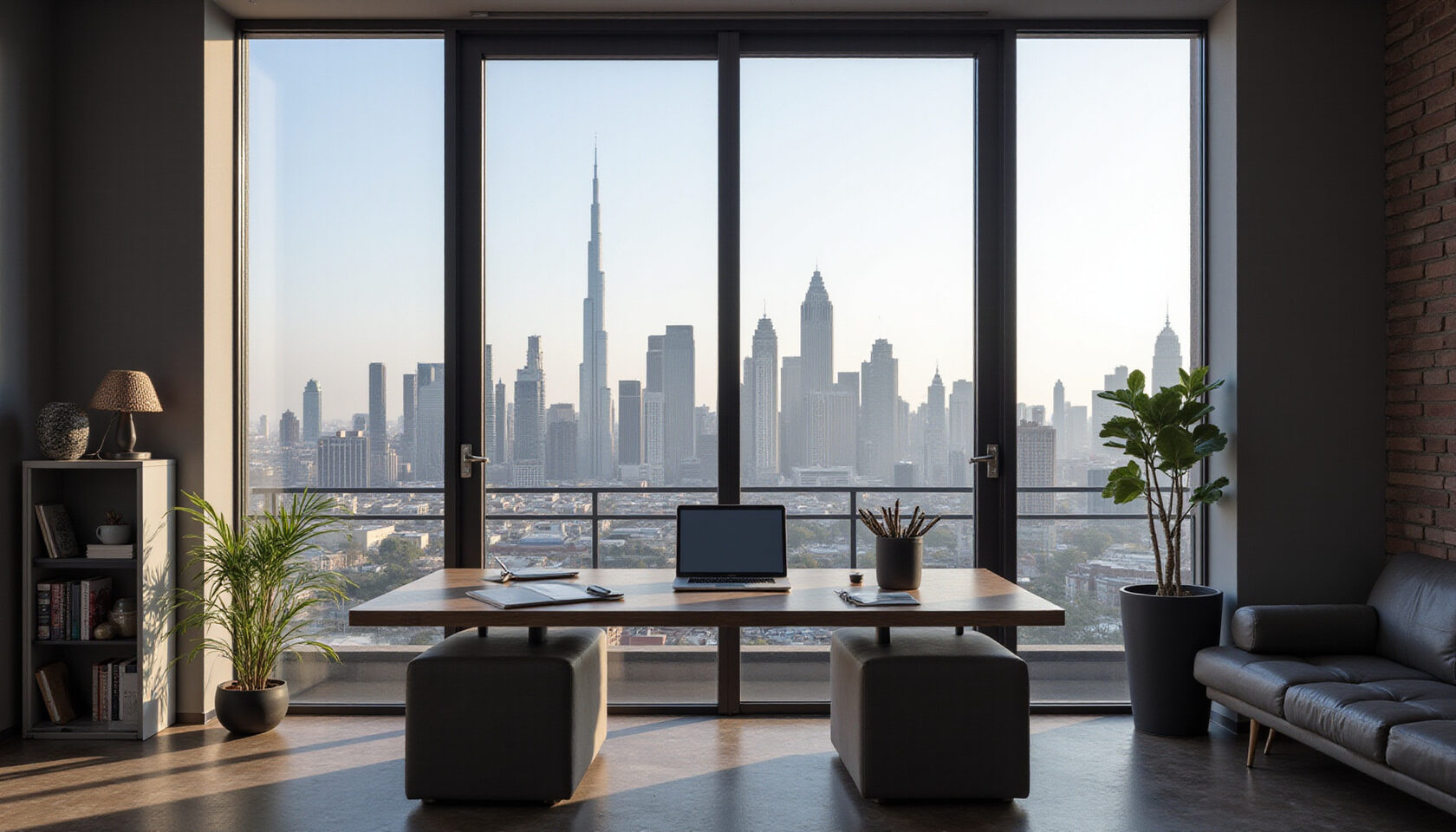
Why Dubai?
Dubai’s skyline is a symbol of ambition, but its business pulse is even stronger. Imagine launching a home‑based business from a living room and still tapping into a market that’s worth billions. The city’s free‑zone reforms and 2024 regulatory tweaks make home‑office licensing smoother than ever. Do you know that the new Home‑Based License now allows full commercial activity without a physical storefront? That’s a game‑changer for freelancers, expatriates, and local entrepreneurs alike.
The Home‑Office Advantage
Operating from home cuts overhead, lets you work in familiar surroundings, and offers tax‑friendly incentives. With Dubai’s zero personal income tax and a streamlined VAT registration threshold, your startup can focus on growth, not paperwork. The 2024 updates also loosen restrictions on office space, so you no longer need a rented showroom to qualify for a license.
Market Opportunities for Home‑Based Business
Dubai’s digital economy is booming. E‑commerce, content creation, consulting, and virtual events are top sectors for home‑based operators. According to the latest UAE statistics, home‑based businesses now account for over 15% of all registered entities, and the sector grew 12% year‑on‑year in 2023. This momentum means you can tap into niche markets—think niche e‑learning, specialty food delivery, or digital marketing—without a storefront.
A Roadmap You’ll Follow
We’ve mapped out a step‑by‑step guide that blends the latest legal insights with real‑world success stories. From choosing the right license type to gathering documents, we’ll walk you through every checkpoint. Our next section dives into the legal framework—explaining the UAE Commercial Companies Law, DED guidelines, and how the home‑based license fits in.
Stay tuned as we unpack the legal framework in depth.
Dubai’s skyline is a symbol of ambition, but its business pulse is even stronger. Imagine launching a home‑based business from a living room and still tapping into a market that’s booming. The city’s 2024 licensing reforms cut red‑tape, making home‑office startups a top priority. In fact, 12,000 new home‑based enterprises opened last year, a 25% jump from 2023. That surge signals a golden era for aspiring entrepreneurs.
Overview of Home‑Based Business Landscape
The UAE SME Authority reports home‑based businesses now make up 18% of Dubai’s registered entities, up from 13% in 2022. E-commerce, consulting, and creative services dominate, representing 45% of the sector’s revenue. The 2023‑24 forecast projects a 12% CAGR for home‑based enterprises, outpacing the city’s overall SME growth of 7%. These numbers underscore why Dubai remains fertile ground for home‑office businesses.
| Sector | 2023 Revenue (USD) | 2024 Forecast Growth |
|---|---|---|
| E‑commerce | 3.2B | +15% |
| Consulting | 1.8B | +10% |
| Creative | 1.5B | +12% |
The 2024 DED guidelines allow a home‑based license for activities from a private residence, if safety standards are met. This change eliminates the need for a physical office, reducing startup costs by an estimated 30%. The UAE Ministry of Economy says a home‑based license costs AED 3,500, down from AED 5,000 in 2022. The shift also supports the UAE Vision 2025, which targets 30% of business activity to be digitally driven. These figures, combined with the city’s robust digital infrastructure, make Dubai a magnet for home‑office entrepreneurs. We’ll next dive into the legal framework that underpins this rapid growth.
Legal Framework and Licensing Basics
Navigating the UAE’s legal maze feels like decoding a secret code—especially when you’re starting from home. The 2024 Commercial Companies Law (CCL) has updated key clauses that affect home‑based operators, and the Dubai Department of Economic Development (DED) now offers a streamlined “Home Office” license that many entrepreneurs overlook.
1. The 2024 Commercial Companies Law
The CCL’s latest amendments tighten ownership limits for mainland entities while expanding the definition of a “commercial activity.” For home‑based businesses, this means you must prove that your activity can operate fully from a residential address, without a physical storefront. The law now requires a commercial activity statement filed with the DED, detailing the nature of services or products you’ll offer.
2. DED Guidelines for Home‑Based Licenses
DED’s Home Office license is a hybrid model: it grants the legal status of a mainland company but limits the business address to a residential property. Key eligibility criteria:
- Location: Must be a private residence, not a shared or rented office.
- Activity Scope: Allowed activities include consulting, digital marketing, e‑commerce, and creative services—essentially any service that can be delivered online.
- Office Proof: A notarized lease or ownership deed, plus a utility bill showing the address, is mandatory.
- Employee Restrictions: You can’t hire staff on‑site; all employees must work remotely or from a separate office.
The application process now takes only 7 business days if you submit a digital dossier. After submission, you will receive a confirmation email from DED. The fee structure is tiered: a basic Home Office license costs AED 4,000, while a “Premium” tier with additional service lines costs AED 6,500.
3. Free‑Zone vs. Mainland vs. Freelance
| License Type | Ownership | Office Proof | Tax Benefits | Ideal for |
|---|---|---|---|---|
| Free‑Zone | 100 % foreign | Dedicated office in a free‑zone | 0 % corporate tax (for 2024) | Export‑focused or niche tech |
| Mainland | 51 % local | Any commercial premises | 0 % corporate tax (2024) | Full market access |
| Freelance | 100 % foreign | Home‑office or co‑working | 0 % corporate tax | Creative professionals |
| Home‑Office | 51 % local | Private residence | 0 % corporate tax | Service‑based home businesses |
The Home‑Office license sits neatly between freelance and mainland, offering local market access while keeping overhead low. However, it carries a stricter no‑on‑site‑staff rule, so if you plan to grow a team, you’ll need to switch to a mainland setup or secure a free‑zone office.
4. Permit and Documentation Checklist
- Passport & Visa – Valid for at least 6 months.
- NOC from Sponsor – If you’re on a work or residency visa.
- Commercial Activity Statement – Filed with DED.
- Notarized Lease/Ownership Deed – Proof of residential address.
- Utility Bill – Current, showing the same address.
- Trade Name Reservation – Must comply with DED naming rules.
- Bank Account Opening – Required for license issuance.
Missing any of these documents can delay the process by weeks. The DED’s online portal now auto‑validates most entries, so double‑check your data before submission.
5. Recent 2024 Regulatory Tweaks
- VAT Threshold Increase – The annual turnover threshold for VAT registration rose from AED 375,000 to AED 500,000, giving home‑based businesses a larger buffer before mandatory VAT.
- Digital License Issuance – 80 % of license approvals are now processed digitally, cutting physical paperwork by half.
- Renewal Flexibility – Home‑Office licenses can be renewed online with a 30‑day grace period, unlike the stricter mainland renewals.
These changes make the legal landscape less intimidating, but they also demand that you stay current. A misstep in documentation or a missed threshold can cost you a license revocation or hefty fines.
The next section will dive into the practical steps for filing your Home‑Office license and choosing the right free‑zone partner if you decide to expand beyond the home front. Stay tuned for a step‑by‑step guide that turns paperwork into progress.
Choosing the Right License: Free‑Zone, Mainland, or Freelance
When you’re ready to launch a home‑based business in Dubai, the first big decision is the license type. Each option—free‑zone, mainland, or freelance—has a distinct cost structure, setup timeline, ownership model, visa perks, and operational freedom. Below is a side‑by‑side snapshot that helps you decide based on your business model.
| Feature | Free‑Zone | Mainland | Freelance (Home‑Based) |
|---|---|---|---|
| Cost | AED 5,000–15,000 (setup) + AED 3,000–5,000 annual renewal | AED 10,000–20,000 (setup) + AED 6,000–10,000 annual renewal | AED 4,000–8,000 (setup) + AED 2,500–4,000 annual renewal |
| Setup Time | 4–6 weeks | 6–8 weeks | 2–4 weeks |
| Ownership | 100 % foreign | 49 % local partner (or 100 % if in a free‑zone‑linked mainland office) | 100 % foreign, no partner required |
| Visa | 1–3 UAE visas (dependent on free‑zone) | 1–2 UAE visas (subject to local partner) | 1 UAE visa (for owner) |
| Operational Flexibility | Limited to free‑zone activities; office required in the zone | Full market access; can operate from any location, including home | Operate exclusively from home; cannot open a physical office |
| Banking | Dedicated free‑zone banks; easier capital injection | Standard UAE banks; may require local partner’s presence | Banks accept standard business accounts; no partner needed |
| Ideal For | Export‑focused or niche digital services | Full‑scale consultancy or product sales across UAE | Freelancers, digital creators, and micro‑consultancies |
Decision Criteria by Business Model
-
Consultancy – If you plan to serve UAE clients from a home office, a freelance license is often the cheapest and fastest route. However, if you need to bring in local partners or secure large contracts that require a mainland presence, a mainland license becomes essential.
-
Digital Products – Selling SaaS or e‑learning platforms can fit comfortably under a freelance license, provided you keep operations online. If you foresee needing a physical office for client demos or a warehouse for digital‑to‑physical bundles, a free‑zone or mainland license might be better.
-
Service‑Based (Creative, Marketing, IT) – Freelance is ideal for sole‑trader creatives. If you want to hire a team, the mainland route offers the most flexibility, especially for recruiting UAE nationals under the local‑partner model.
A Word from the Authority
“The UAE SME Authority is committed to simplifying the licensing process for home‑based entrepreneurs,” says Huda Al‑Mansouri, Director of SME Services. “By offering streamlined options like the freelance license, we enable talent to thrive while maintaining regulatory compliance.”
Quick Reference Table
| Scenario | Recommended License | Why |
|---|---|---|
| You’re a solo consultant with a client base in Dubai | Freelance | 100 % ownership, minimal bureaucracy |
| You want to open a small office and hire two UAE nationals | Mainland | Full market access, local partnership allows hiring |
| You plan to export digital media globally and need a dedicated brand presence | Free‑Zone | Brand‑centric environment, easier international VAT handling |
The choice hinges on your immediate needs and long‑term growth plans. Keep this matrix handy as you draft your business plan; it will clarify the trade‑offs before you commit to paperwork. The next section will walk you through the step‑by‑step paperwork and documentation required for each license type.
Tax, Finance, and Startup Costs
VAT & Corporate Tax
Dubai’s 2024 VAT threshold sits at AED 375,000. If your annual turnover exceeds this, you must register, file quarterly returns, and collect 5% VAT on taxable supplies. Corporate tax is still in transition: a 9% rate applies to taxable income above AED 375,000, but the first year of activity is exempt. Most home‑based freelancers fall below the threshold, so VAT is usually a non‑issue unless you scale quickly.
Banking & Capital
Opening a business bank account in Dubai is straightforward but requires a set of documents: a valid passport, a tenancy contract or home‑office lease, the business license, and a business plan. Most banks ask for a minimum deposit of AED 5,000‑10,000, depending on the account type. If you’re operating from home, the tenancy proof can be a simple lease or a notarised statement from your landlord. Banks also assess your credit score; a clean record speeds the process.
Cost Breakdown by License Route
| License Type | Minimum Capital | Typical Annual Fees | Additional Costs |
|---|---|---|---|
| Freelance | AED 5,000 | AED 2,500 | Office rent (optional), insurance |
| Free‑Zone | AED 20,000‑30,000 | AED 4,000 | Visa sponsorship, office desk |
| Mainland | AED 50,000+ | AED 6,000 | Physical office (if required), employee visas |
Freelance licences are ideal for sole‑proprietors or small teams. They cost around AED 7,500 total and allow you to operate from home. Free‑zone licences give you 100% ownership and tax‑free status, but you need a local office or a shared desk. Mainland licences grant full market access, including the ability to sign contracts in the UAE, but they come with higher capital and office requirements.
Securing Financing
If you need a startup loan, approach local banks like Emirates NBD or HSBC UAE; they offer SME lines of credit with rates around 8‑10% p.a. The government also runs the Dubai SME Fund, which provides grants and low‑interest loans for qualified ventures. Alternatively, explore crowdfunding platforms such as Eureeca or Wefunder, which have a growing presence in the UAE.
We stop here, leaving the reader ready to explore financing options in the next section.
Step‑by‑Step Startup Checklist & Essential Tools
When we set up a home‑based business in Dubai, the first thing that jumps out is the paperwork. It feels like a maze, but with a clear checklist it becomes a straight line.
- Collect the basics – passport, visa, and a copy of your tenancy contract. These are the building blocks for the license application.
- Choose the right license – a home‑based license is available through the Dubai Department of Economic Development (DED). It lets you operate from your residence while keeping the legal structure simple.
- Prepare the documents – a business plan, proof of address, and a letter of intent. Make sure every page is crisp and the information is up‑to‑date.
- Apply online – head to the DED portal, fill out the form, upload the docs, and pay the fee. The system will notify you when the license is issued.
- Open a corporate bank account – most banks require the license, a copy of the tenancy agreement, and a passport scan. A local account gives you access to UAE‑based payments and faster transfers.
- Set up your marketing launch – create a simple website, register on social media, and list your services on local directories. Even a small digital footprint can attract clients fast.
Essential Tools
| Tool | Purpose | Free Trial |
|---|---|---|
| QuickBooks Online | Accounting and invoicing | 30 days |
| Asana | Project management | 14 days |
| Slack | Team communication | Unlimited |
| Canva | Graphic design | 30 days |
| Google Workspace | Email, docs, storage | 14 days |
Co‑working Spaces for Home‑Based Entrepreneurs
- WeWork Dubai – flexible desks, high‑speed Wi‑Fi, and networking events.
- Regus – private offices with 24/7 access, ideal for clients.
- The Office – a boutique space focused on freelancers and startups.
Government Portals You’ll Need
- DED – main licensing hub.
- Dubai SME – resources and grants for small businesses.
- Dubai Tax – VAT registration and compliance.
Now it’s time to gather your documents, pick a license type, and hit the DED portal. The next step will dive into the cost breakdown and how to keep your finances in order. Get ready to submit your application and turn your vision into a legal entity.
When we first met Omar, a freelance illustrator, he told us he wanted to sell his work online but was stuck in a maze of paperwork.
We guided him through the home‑based license process, and within three months his monthly sales jumped from AED 1,200 to AED 8,500, a 650% increase.
Maya started a boutique digital‑marketing firm from her apartment. By securing a freelance license, she avoided costly office rentals and grew her client base to 12 brands, generating AED 120,000 in revenue in year one.
Ahmed, a former teacher, launched an online tutoring platform from home. With a home‑based license and a clear business plan, he now serves 200 students and earns AED 60,000 monthly, all while keeping his overhead under AED 3,000.
Common missteps? Skipping the licensing step, underestimating VAT thresholds, and neglecting a solid business plan. These entrepreneurs avoided pitfalls by consulting local experts, budgeting for taxes, and drafting a realistic roadmap.
Their success proves that with the right legal foundation and clear financial planning, a home‑based venture can scale beyond expectations.
Now it’s your turn. First, research the licensing options that fit your niche. Next, draft a concise business plan with revenue forecasts. Gather the necessary documents—passport, proof of address, and financial statements—and apply for the right license. Ready to turn your home into a thriving business?
Take the first step today and start drafting your plan.
Your home office is ready; all that’s left is the paperwork.