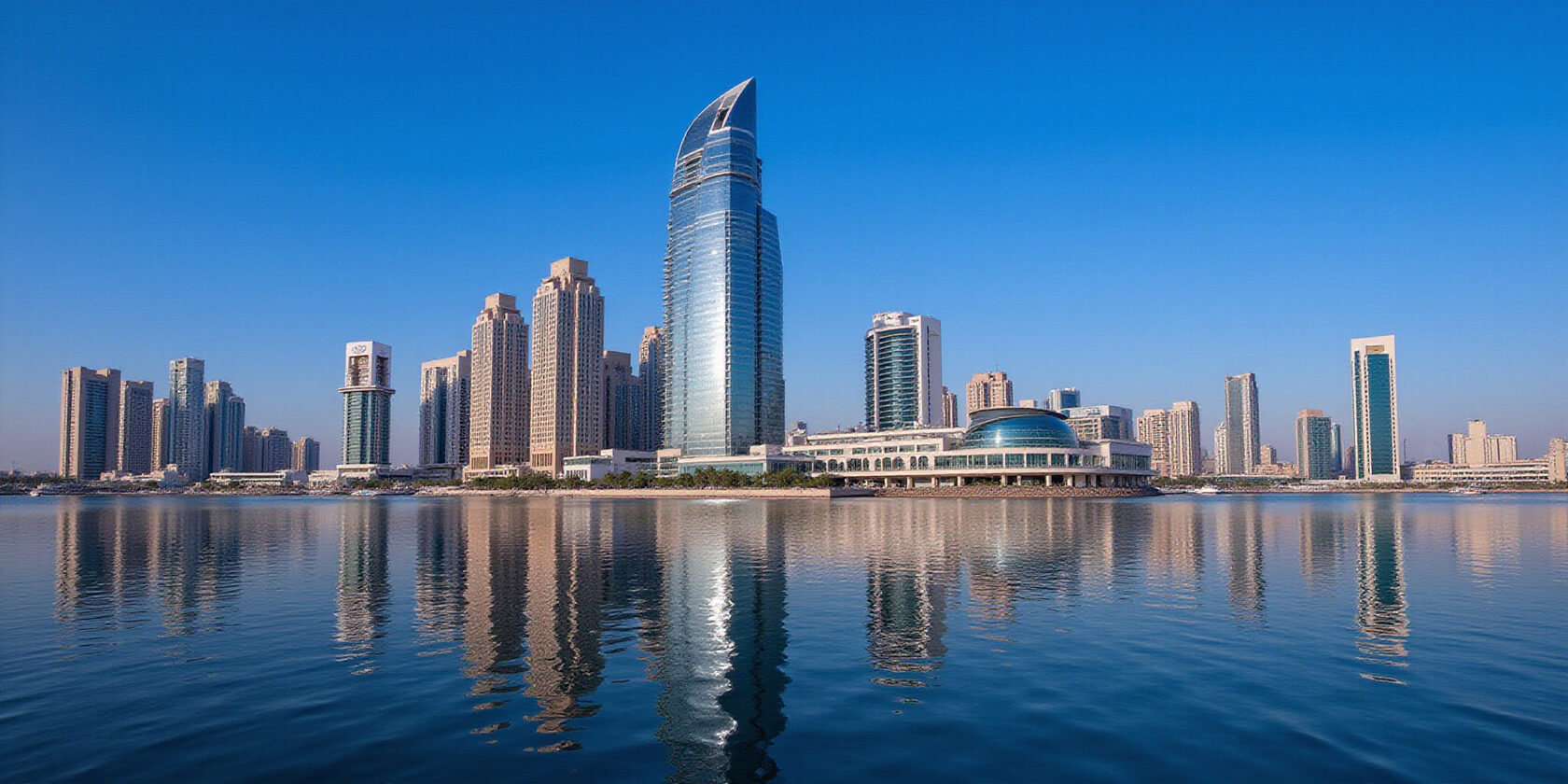
Dubai’s skyline is rising faster than a rocket, and it’s not just the glass towers that pull entrepreneurs in. Offshore business setup dubai offers a clear, step‑by‑step roadmap that lets you choose between mainland, free‑zone, or offshore entities. We’ll walk you through the legal maze, the paperwork, and the bank‑account hurdles, all while keeping the tone light and actionable. Ever wondered why 100 % foreign ownership is now a norm? We’ll explain it in plain English, no jargon.
This guide also covers business setup companies in dubai, ensuring you have the most relevant information.
Why Dubai Stands Out for Company Formation
Dubai blends regulatory clarity with economic dynamism. The city’s free‑zones provide 100 % ownership and zero import duties, while mainland licences grant access to the UAE market. Offshore structures keep your operations international and shield assets. This mix creates a playground for company setup dubai seekers.
Navigating the infrastructure requirements can be tricky without a local partner.
The Roadmap in a Nutshell
- Choose your structure – Mainland, free‑zone, or offshore.
- Reserve a trade name – Quick online check, valid 30 days.
- Prepare MoA & AoA – Templates vary by jurisdiction.
- Submit application – Through DED or the chosen free‑zone portal.
- Pay fees – From AED 3,000 for licences to AED 5,000 for offshore registration.
- Open a corporate bank account – Provide licence, MoA, and a concise business plan.
- Register for tax & VAT – Mandatory if turnover exceeds AED 375,000.
Choosing the right structure depends on your market reach, tax exposure, and operational flexibility. Mainland gives you a local presence, free‑zone offers 100 % ownership, offshore protects assets.
What You’ll Need
| Document | Purpose | Who Provides |
|---|---|---|
| Trade name reservation | Confirms uniqueness | Applicant |
| Letter of intent | Declares activity | Applicant |
| MoA & AoA | Company structure | All shareholders |
| Lease agreement | Physical presence | Applicant |
| Passport copies | ID verification | Shareholders |
| Bank reference | Financial standing | Applicant’s bank |
These items are the backbone of any company formation in dubai process. Missing a passport copy? Your bank account could be denied.
Quick Tips
- Act fast – Name reservations expire in 30 days.
- Use a local service – They’ll handle notarisation and translation.
- Keep a compliance calendar to track your infrastructure obligations.
- Remember, the right choice can shave months off your launch timeline.
We’ll revisit each model in depth later.
Offshore Business Setup Dubai: Mainland, Free‑Zone, and Offshore Corporate Triangle
Deciding how to set up an offshore business in Dubai isn’t just a paperwork exercise—it’s a pivotal choice for entrepreneurs, foreign investors, and legal consultants who want a foothold in the UAE. In 2023, the UAE opened the door to 100 % foreign ownership for most mainland activities, a shift that feels like a gate opening wide.
Legal Frameworks
| Structure | Authority | Key Legal Point |
|---|---|---|
| Mainland | Dubai Economic Department (DED) | Must register with DED, no local sponsor post‑2023 reforms |
| Free‑Zone | Zone‑specific authority | Operates under zone rules, cannot trade with UAE mainland |
| Offshore | International jurisdiction (e.g., BVI) | No UAE presence needed, governed by foreign law |
Ownership Rules
- 100 % foreign ownership across all three, but mainland now lifts the 51 % UAE‑national rule.
- Mainland requires a physical office; free‑zone offers flex‑office or virtual office.
- Offshore needs no office, but requires a local registered agent in the chosen jurisdiction.
Market Reach & Constraints
- Mainland: Unlimited UAE market access; ideal for retail, manufacturing, and consulting.
- Free‑Zone: Restricted to the zone’s economic activity; perfect for tech startups and media needing 100 % ownership.
- Offshore: Global trading, asset protection, and intellectual‑property licensing; no direct UAE sales.
Alignment with Business Goals
- Growth‑oriented UAE retailers: Mainland gives you the storefront.
- Innovation hubs: Free‑zone offers a sandbox with low bureaucracy.
- Cross‑border investors: Offshore provides clean corporate structure and tax neutrality.
Advantages & Trade‑offs
| Aspect | Mainland | Free‑Zone | Offshore |
|---|---|---|---|
| Setup Time | 4–6 weeks | 2–3 weeks | 1–2 weeks |
| Cost | AED 9,500–31,500 | AED 11,000–26,000 | AED 3,000–5,500 |
| Compliance | Annual returns, VAT, corporate tax | Annual returns, VAT | Minimal, but jurisdictional filings required |
| Flexibility | High, but requires UAE presence | Medium, zone‑restricted | Low on local market, high on global freedom |
These numbers come from 2025 regulatory updates by the UAE Federal Tax Authority and the BVI Registry. Choosing the right triangle vertex depends on whether you value local market penetration, rapid scale, or international asset protection.
Practical Takeaway
If you’re a startup eyeing the UAE consumer base, mainland is your launchpad. If you want 100 % ownership with a low‑bureaucracy launchpad, pick a free‑zone that matches your niche. If your focus is global trade or holding assets, offshore is the cleanest path.
Next Steps
- Draft a MoA that reflects your chosen structure.
- Secure a trade name and office (if needed).
- Apply through the relevant authority, and let the paperwork flow.
Keep these comparisons in mind as you map your next corporate move; the triangle isn’t just a shape—it’s a strategic compass.
For more detailed guidance, refer to our articles on free‑zone setup and offshore companies.
When you first think about setting up an offshore business in Dubai, the headline that pops up is ownership freedom.
But that freedom isn’t universal—rules still bite.
Are you a foreign investor, a UAE national, or somewhere in between?
Let’s pull apart the eligibility maze.
Who Can Own a Dubai Company? Eligibility, Shareholder Caps, and Nationality Rules
The entity type decides the rules. Mainland firms now let you own 100 % in most sectors, though a few regulated activities still need a local partner. Free‑zone entities grant full ownership but can’t trade with the mainland. Offshore companies don’t need a physical presence or a local sponsor.
| Entity | Minimum Shareholders | Resident Shareholder | Capital | Nationality |
|---|---|---|---|---|
| Mainland | 2 | No | No statutory minimum (AED 200 k for regulated) | Any |
| Free‑zone | 1 | No | Often no minimum | Any |
| Offshore | 1 | No | Varies (AED 5 k in BVI) | Any |
When you’re checking eligibility, keep an eye on activity scope, minimum capital, resident shareholder requirement, and nationality constraints. These differ across the three entity types.
Nationality isn’t the big deal it looks like. Dubai welcomes investors from over 200 countries, but some zones bar politically exposed persons. A few free‑zone authorities also demand at least one local office address for registration.
Here’s a quick checklist to vet eligibility before you dive into paperwork. Use it during the first consultation to skip costly delays.
- Confirm entity type and ownership rules.
- Verify the minimum number of shareholders.
- Check if a resident shareholder is needed.
- Verify your example of required capital.
- Ensure your business activity is licensed.
- Gather passports and proof of address.
Maria, a Colombian entrepreneur, set up a tech hub with one shareholder. She secured a flex‑office lease and used a local agent to file the Memorandum of Association within two weeks. Her company needed only AED 50,000 nominal capital.
Ahmed, a Saudi investor, formed a BVI holding with one shareholder.
In JAFZA, UAE nationals may own up to 49 % of a company.
Once you confirm eligibility, the next step is drafting the Memorandum of Association and securing a local office address. If you’re ready, map your business activity, confirm the required capital, gather passports, and consult a local advisor—then you’re on the right track. These insights give you a clear roadmap for ownership. Start your ownership journey today and unlock Dubai’s business potential.
Offshore Business Setup Dubai
Offshore business setup Dubai can feel like a labyrinth of forms and stamps. We’ve mapped the maze so you can navigate it without getting lost. Think of the checklist as a compass—each document a direction toward a compliant business. Ready to chart the course?
Essential Documents Checklist
| Document | Purpose | Prepared By | Submission Authority |
|---|---|---|---|
| Trade Name Reservation | Confirms unique company name | Applicant | DED or free‑zone portal |
| Letter of Intent | Declares activity and ownership | Applicant | DED / free‑zone |
| Memorandum of Association (MoA) | Defines structure, shareholding | Applicant (notarised) | DED / free‑zone |
| Articles of Association (AoA) | Governance rules | Applicant | DED / free‑zone |
| Shareholder Agreement | Rights, obligations, dispute resolution | Shareholders | Optional notarisation |
| Proof of Address (lease or virtual office) | Physical presence requirement | Applicant | DED / free‑zone |
| Passport Copies (shareholders & directors) | Identification | Applicant | DED / free‑zone |
| Bank Reference Letter | Demonstrates financial standing | Applicant’s bank | DED / free‑zone |
| Power of Attorney (if using agent) | Authorises agent | Applicant | DED / free‑zone |
| Tax Residency Certificate (for offshore) | Compliance with jurisdictional tax laws | Applicant | Offshore jurisdiction |
Notarisation Maze
Notarisation in the UAE calls for a local notary public who checks signatures and authenticates documents. The steps differ between mainland, free‑zone, and offshore areas. In mainland filings, the MoA and AoA must be notarised before you hand them over to the DED. Free‑zone entities can sometimes accept electronic notarisation, but having a hard‑copy that’s been notarised still feels safer. Offshore companies typically rely on a local agent in the chosen jurisdiction to take care of notarisation and filing.
Registration Pathway Flowchart
Insert flowchart illustrating the registration pathway for each company type here.
Tips to Avoid Pitfalls
- Double‑check names: Ensure all names match passport data exactly.
- Reserve trade name first: Drafting the MoA before reservation can lead to costly re‑filing.
- Choose a reputable notary: Use one who accepts electronic signatures to speed up the process.
- Keep notarised PDFs: Store copies for audit trails and future reference.
- Verify stamp standards: The notarisation stamp must meet the authority’s specifications.
- Know the validity period: Some notarised documents expire after 90 days, so plan your filing timeline accordingly.
- Use digital platforms: Many free‑zones offer online notarisation portals, reducing in‑person visits.
With these documents in hand and notarisation complete, the next step is submitting the licence application—let’s dive into the filing process.
Downloadable Templates
- Memorandum of Association (MoA) template
- Articles of Association (AoA) template
- Shareholder Agreement template
Offshore business setup dubai is the headline that draws entrepreneurs into the UAE’s glittering market.
We’ve seen the hype, but the real challenge lies in navigating the paperwork maze.
Do you know which path—mainland, free‑zone, or offshore—fits your vision?
Think of each route as a road: one winds through local markets, another hugs the coast, and the third sails beyond borders.
We’ll map these roads step‑by‑step so you can choose the fastest lane.
Step‑by‑Step Roadmaps: From Trade Name to Bank Account for Each Company Type
Mainland
- Choose activity from DED list.
- Reserve trade name online.
- File letter of intent.
- Draft and notarise MoA & AoA.
- Secure a physical office.
- Submit license application to DED.
- Pay trade licence and registration fees.
- Receive trade licence.
- Register with FTA for tax.
- Open corporate bank account.
Free‑zone
- Pick a free‑zone that matches your industry.
- Reserve trade name through the zone portal.
- Submit application with required docs.
- Obtain initial approval (1‑2 days).
- Sign MoA & AoA using zone templates.
- Lease an office inside the zone.
- Pay licensing fees.
- Get free‑zone licence stamped.
- Register for tax & VAT if needed.
- Open bank account at zone‑bank or external bank.
Offshore
- Select jurisdiction (BVI, Seychelles, etc.).
- Reserve company name.
- Draft MoA & AoA per local rules.
- File incorporation documents.
- Pay incorporation fees.
- Receive certificate of incorporation.
- Open offshore bank account.
| Jurisdiction | Name Reserve | Incorporation Fee | Bank Account Fee |
|---|---|---|---|
| BVI | AED 2,500 | AED 3,000 | AED 5,000 |
| Seychelles | AED 1,800 | AED 2,200 | AED 4,500 |
| Marshall Islands | AED 2,200 | AED 3,500 | AED 5,200 |
Templates for the Memorandum of Association and other key documents are available in the resources section below.
Ready to start? Follow the steps, keep the docs tidy, and you’ll have your bank account up and running faster than a camel in a desert sprint.
Offshore Business Setup Dubai: Fees, Licences, and Ongoing Compliance: What You Pay and When
When we talk about offshore business setup Dubai, the first thing that pops into mind is cost. It’s not just a one‑off payment; it’s a series of recurring fees that can feel like a waterfall if you’re not prepared. We’ll break it down so you know exactly what to expect, from the initial trade licence to the quarterly VAT return.
Initial Outlay
| Structure | Trade Licence | Registration | Office Lease (12 mo) | Total Initial |
|---|---|---|---|---|
| Mainland | AED 3,000‑15,000 | AED 1,000 | AED 5,000‑15,000 | AED 9,500‑31,500 |
| Free‑Zone | AED 5,000‑20,000 | AED 1,000 | AED 5,000‑10,000 | AED 11,000‑26,000 |
| Offshore | N/A | AED 2,000‑5,000 | N/A | AED 3,000‑5,500 |
These figures are snapshots from 2025 and vary by activity, office size, and jurisdiction. Notice how the offshore set‑up starts low because it doesn’t need a physical office.
Recurring Charges
- Licence renewal: AED 500‑1,500 annually, depending on zone.
- Office lease renewal: usually AED 5,000‑15,000/month; negotiate a 12‑month term.
- Corporate tax registration: AED 500 once, then 9 % tax on profits.
- VAT: AED 0 registration fee; quarterly returns cost a professional’s time.
- Audit: AED 3,000‑8,000 yearly for mainland and free‑zone firms.
Compliance Timeline
- Annual General Meeting – 30 days after year‑end.
- Annual Return – Submit 30 days post‑AGM.
- Tax Return – Due by the 15th of the month following the fiscal year.
- VAT Return – Every quarter, 15th of the following month.
- Audit Report – Must be filed with the annual return.
Renewal Procedures
- Trade licence: Submit a renewal form, pay fee, and provide updated trade name if changed.
- Office lease: Sign a new contract or extend the existing one; proof of lease is required for licence renewal.
- Tax & VAT: Update your status with FTA if turnover changes; renew registration if you cross the AED 375,000 threshold.
Keeping these dates in a calendar or using a compliance‑management tool keeps you ahead of the curve. In the next section we’ll explore how to set up a dedicated compliance calendar that syncs with your business activities.
Take the Leap: Quick‑Start Checklist, Templates, and Expert Tips
You’re standing at the edge of opportunity. Offshore business setup dubai can feel like a maze, but we’ve cut the corners. Here’s your fast‑track map: a ready‑to‑use checklist, downloadable templates, and insider hacks to dodge the usual snags. Let’s turn that maze into a straight‑line sprint.
Quick‑Start Checklist
- Reserve a trade name and get a letter of intent.
- Draft and notarise your Memorandum of Association.
- Secure a virtual or physical office lease.
- Submit the licence application, pay the fees, and receive approval.
- Register for VAT and corporate tax if needed.
- Open your corporate bank account.
- Schedule your annual AGM and compliance filings.
Downloadable Templates
- Memorandum of Association (MoA)
- Articles of Association (AoA)
- Shareholder Agreement
- Office Lease Template
Insider Tips to Beat Common Challenges
- Delayed licence approval? Keep a checklist of required documents and double‑check each before submission.
- High office rent? Negotiate a flex‑office lease; it’s 30% cheaper and still shows a physical presence.
- Bank account rejection? Bring a concise business plan and a verified proof of address.
- Compliance overload? Use a compliance calendar app—set reminders for every filing date.
- Missing a tax deadline? Register for auto‑reminders with the UAE Federal Tax Authority.
Ready to jump? Grab the checklist, download the templates, and let the expert tips guide your first steps. Your Dubai company is waiting—let’s make it happen.