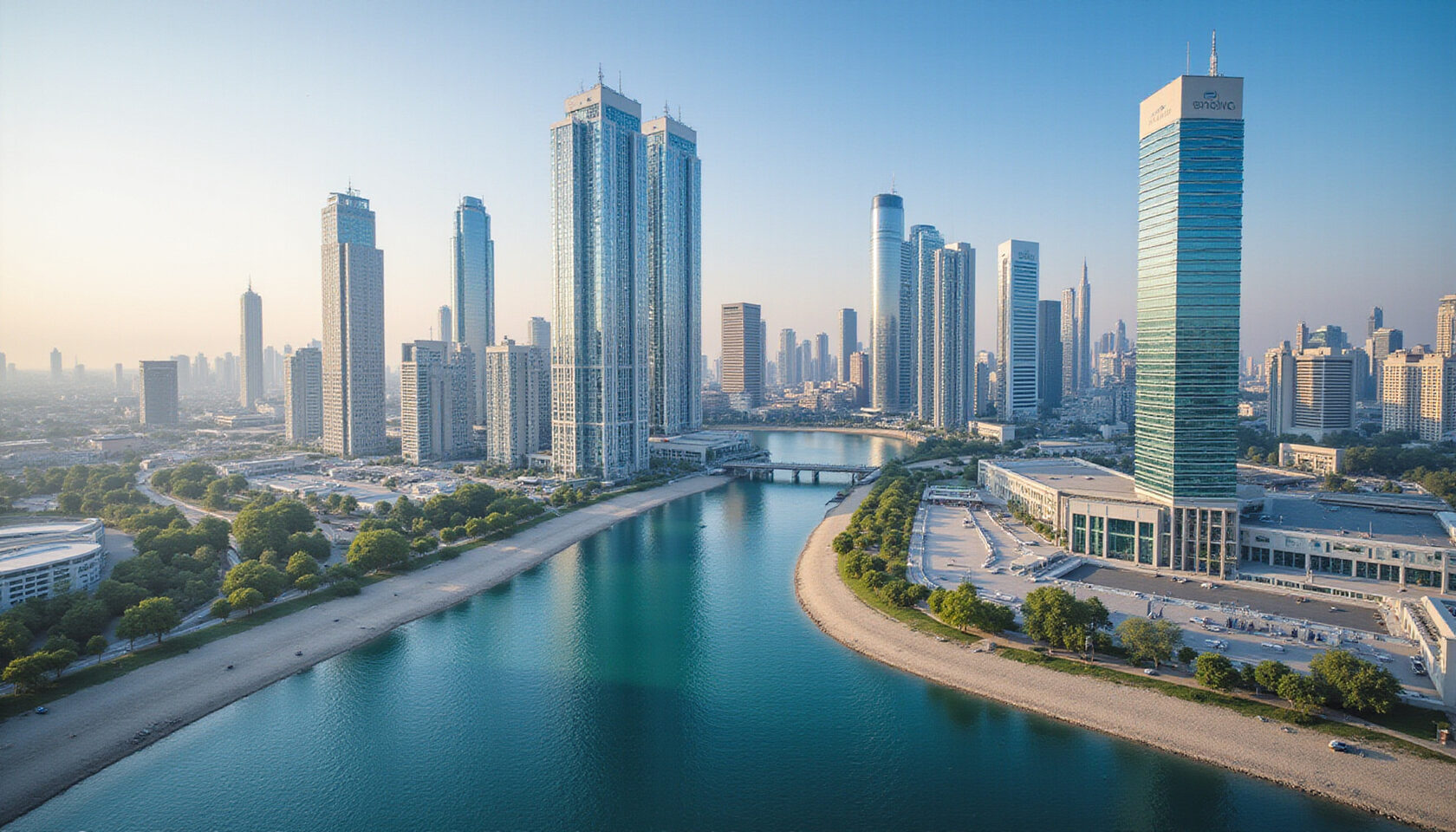
Dubai is not just a desert city; it’s a strategic launchpad for media and tech worldwide. Picture a city where a media giant can set up shop in a day, thanks to free‑zone incentives that strip away bureaucracy. We’re here to empower you—media pros, tech founders, investors—to navigate this landscape with confidence.
Why Dubai? Because the UAE’s vision turns ambition into infrastructure. The free‑zone ecosystem—Dubai Media City, Dubai Silicon Oasis, and others—offers 100 % foreign ownership, zero corporate tax, and state‑of‑the‑art connectivity. These perks translate into lower costs, faster time‑to‑market, and a network of global partners.
This guide will walk you through each free‑zone’s unique strengths, compare incentives, and give you a step‑by‑step licensing playbook. We’ll also spotlight success stories like BBC and local startups that thrive here. Ready to turn the city’s promise into your reality? Let’s dive into the first zone and uncover how Dubai can be your next strategic base.
Dubai Media City: The Media Powerhouse
Iole Dubai: Why DMC is the Media Powerhouse
Dubai Media City sits on the eastern edge of the city, spanning 200 hectares of prime waterfront real estate. It’s the only free‑zone that has carved out a niche exclusively for media and creative enterprises. From broadcasting studios to digital labs, every facility is designed to meet the exacting standards of global media giants.
Location & Scale
- Geography: Adjacent to Dubai Internet City and close to the Dubai International Airport.
- Size: 200 ha, home to over 1,500 companies.
- Visitor Footfall: 3 million visitors annually, a figure that underscores its status as a media hub.
Infrastructure & Services
Dubai Media City offers a full spectrum of services that make setting up a media operation almost effortless:
- State‑of‑the‑art studios – 50+ fully equipped broadcast studios with 24‑hour access.
- Digital media labs – high‑performance servers, cloud‑ready workstations, and a dedicated fibre‑optic network.
- Co‑working spaces – flexible office suites for freelancers and start‑ups.
- Legal & compliance support – on‑site counsel for licensing and regulatory matters.
Licensing & Regulation
The DMC Authority operates under a media‑specific regulatory framework that simplifies the licensing process. A single application grants a media licence, a free‑zone company registration, and a 100 % ownership stake. The process typically takes 5‑7 business days, a fraction of the time required in mainland UAE.
Real‑World Success Stories
- BBC Arabic – relocated its regional headquarters to DMC in 2019, citing the zone’s rapid setup time and robust infrastructure.
- CNN Digital Hub – uses DMC’s high‑bandwidth network for live streaming across the Middle East.
- Local Start‑ups – over 200 start‑ups have launched from the DMC incubator, many scaling to regional leaders.
Free‑Zone Incentives
- Full ownership – 100 % foreign ownership without a local sponsor.
- Tax benefits – 0 % corporate and personal income tax for 50 years.
- Visa facilitation – streamlined work and residency visas for up to 25 employees per licence.
These incentives, combined with world‑class infrastructure, keep Dubai Media City the top choice for media ventures looking to tap into the Gulf market.
The next section will explore Dubai Silicon Oasis and how it complements DMC’s media ecosystem.
Dubai Silicon Oasis: Tech’s Innovation Hub
Dubai Silicon Oasis (DSO) sits on the edge of Dubai’s bustling tech corridor, just minutes from Sheikh Zayed Road, Dubai Internet City, and the world‑class Al Maktoum International Airport. Its proximity to major transport nodes means talent and equipment can arrive in a day, while the free‑zone framework removes the hassle of visas and customs.
Strategic Location
DSO occupies 200 hectares of reclaimed land, surrounded by the Dubai Internet City and Dubai Media City clusters. The zone’s internal 5‑kilometre network of roads, pedestrian paths, and a dedicated metro station make commuting a breeze. For logistics, the nearby port of Jebel Ali and the Sheikh Zayed Road highway provide seamless road links to the rest of the UAE and beyond.
State‑of‑the‑Art ICT
High‑speed connectivity is the backbone of DSO. The zone offers 10 Gbps fiber to every office, 5G coverage across the campus, and a private data‑center with 99.99 % uptime. These features give startups a competitive edge in latency‑sensitive services such as AI, VR, and fintech.
Licensing & Costs
DSO offers several license categories:
- Technology Company – software, hardware, and research firms.
- Research & Development – R&D centres and labs.
- Data Center – cloud and colocation providers.
- ICT Service Provider – telecom, IT consulting, and managed services.
Average setup costs range from $30,000 to $50,000 and the approval timeline is 2–4 weeks. Required documents include a trade name reservation, a notarised partnership deed, a bank deposit, and a detailed business plan. Once approved, the free‑zone office space is ready for immediate occupation.
Tax & Ownership
DSO’s biggest draw is its 100 % foreign ownership and zero corporate tax for 50 years. Import duties on equipment are waived, and there are no personal income taxes for employees. This environment lets founders focus on scaling rather than bookkeeping.
Success Stories
- GlobalTech, a SaaS company, grew from 5 to 200 staff in three years after launching in DSO, and now serves 15 % of the Middle East market.
- FinTechX secured a $50 million Series B round after establishing its headquarters in the zone, thanks to the low cost of living and high‑speed internet.
Expert Insight
According to DSO Authority Director Ahmed Al‑Farsi, “DSO’s 100 % foreign ownership and zero corporate tax are game changers for startups. The zone’s infrastructure and strategic location give companies a real competitive edge.”
Next, we’ll walk through the step‑by‑step licensing guide that turns these advantages into a tangible business presence.
Dubai Silicon Oasis Authority | Dubai Media City Authority
Comparing Incentives: DMC vs. DSO vs. Abu Dhabi Media City
Choosing the right free‑zone hinges on more than just location—it’s about the incentive mix that fuels growth. Below is a snapshot that pits Dubai Media City (DMC), Dubai Silicon Oasis (DSO), and Abu Dhabi Media City (ADMC) against each other on the metrics that matter most to media and tech founders.
| Metric | Dubai Media City | Dubai Silicon Oasis | Abu Dhabi Media City |
|---|---|---|---|
| Tax Benefits | 100 % corporate tax exemption for 50 years | 100 % exemption for 50 years | 100 % exemption for 50 years |
| Ownership Rules | 100 % foreign ownership | 100 % foreign ownership | 100 % foreign ownership |
| Licensing Costs | AED 12 k–18 k (annual) | AED 10 k–15 k (annual) | AED 15 k–20 k (annual) |
| Visa Regime | 5‑year renewable, 3‑tier work visas | 5‑year renewable, 3‑tier work visas | 5‑year renewable, 3‑tier work visas |
| Connectivity | 10 Gbps fibre, 5G trials | 100 Gbps fibre, 5G‑ready | 100 Gbps fibre, 5G‑ready |
What the numbers mean: Both DMC and DSO offer identical tax and ownership perks, but DSO’s lower licensing fee and cutting‑edge connectivity make it the sweet spot for tech‑centric startups. DMC, with its media‑centric ecosystem and established tenant mix—BBC, CNN, and local broadcasters—provides a ready network of partners and a culture that speaks the industry’s language. ADMC, while matching the incentives, is newer and still building its media portfolio, yet its proximity to Abu Dhabi’s growing tech corridor and robust data‑center infrastructure can be a decisive advantage for companies eyeing cross‑city expansion.
When deciding, ask yourself: Do you need a media‑first environment or a tech‑first environment? If your core product is content‑delivery, DMC’s ecosystem and talent pool give you immediate market access. If you’re building a SaaS or AI platform, DSO’s bandwidth and lower operating costs win the day. ADMC offers a hybrid option with a growing media scene and strong tech links.
The next step is to dive into the licensing playbook, where we’ll walk through the exact paperwork, timelines, and portal links to get your free‑zone office up and running. Stay tuned for the step‑by‑step guide that turns this comparison into action.
Sources: Dubai Media City Authority, Dubai Silicon Oasis Authority, Abu Dhabi Media City.
Step‑by‑Step Licensing Guide
Getting a license in a Dubai free‑zone feels like unlocking a treasure chest—except the key is a clear list of documents and a few clicks on the right portal. Did you know that both the Dubai Media City Authority (DMC) and Dubai Silicon Oasis Authority (DSO) host their own online portals, each with a wizard that walks you through every required form? We’ll break the process into bite‑size steps, so you can focus on the creative side of your venture.
| Step | Action | Portal | Key Docs | Typical Time |
|---|---|---|---|---|
| 1 | Choose the free‑zone | DMC or DSO | None | 0 days |
| 2 | Submit preliminary application | DMC/DSO portal | Company name, business activity, proposed office | 1–2 days |
| 3 | Pay initial registration fee | DMC/DSO portal | License fee, security deposit | 0–1 day |
| 4 | Upload supporting documents | DMC/DSO portal | Passport copies, CVs, company structure | 3–5 days |
| 5 | Receive licence approval | DMC/DSO portal | Approved licence | 5–7 days |
| 6 | Register with UAE immigration | Immigration portal | Visa application | 1–2 weeks |
- Choose the free‑zone – Your first decision shapes every subsequent step. If you’re eyeing media production, DMC is the obvious pick; for tech‑centric startups, DSO offers better infrastructure.
- Submit a preliminary application – Log into the DMC portal at https://www.dubaimediacity.gov.ae or the DSO portal at https://www.dsoa.gov.ae. Fill out the “New Company” form, selecting media or technology as your activity.
- Pay the registration fee – Fees vary: DMC charges AED 10,000 for a media licence, while DSO’s tech licence starts at AED 8,000. Remember to also pay a refundable security deposit of AED 5,000, which you’ll get back when you close the office.
- Upload supporting documents – The portal will request passports, a copy of the proposed office lease, and a detailed business plan. If you’re a solo founder, a simple CV suffices; for a team, upload all members’ passports.
- Receive licence approval – Once the authority reviews your documents, you’ll see a green tick and a downloadable licence PDF. This is your official green light to operate in the free‑zone.
- Register with UAE immigration – Apply for the relevant visa(s) through the immigration portal. For media companies, a media professional visa is available; tech firms can opt for a technology visa.
The entire process usually takes two to three weeks if you keep the paperwork pristine. Keep a copy of every receipt and confirmation email; post‑approval compliance demands proof of payment for audits.
After you receive the licence, the next step is to set up your office space. DMC offers a range of flex‑office solutions, while DSO has dedicated tech labs. Both zones provide utilities and 24‑hour security, so you can focus on content creation or product development.
Now that you’ve cleared the licensing hurdles, you’re ready to explore the next phase—setting up your operational infrastructure. How will you choose between a co‑working space and a dedicated office? What about the cost of utilities and internet bandwidth? These questions will shape the next chapter of your journey.

Ever wondered how a global broadcaster can set up shop in a day in Dubai? The city’s free‑zone system turns that into a reality, offering 100% foreign ownership, zero corporate tax, and a plug‑and‑play office. It’s not just a perk; it’s a strategic engine that powers media giants and nimble startups alike.
Take the BBC, for example. They opened a regional hub in Dubai Media City last year, citing the zone’s state‑of‑the‑art infrastructure and seamless licensing as key drivers. “The speed of setup was astonishing,” says James Larkin, BBC Middle East’s Head of Operations. “We went from idea to broadcast in under three months.”
CNN followed suit, establishing a satellite studio in Dubai Silicon Oasis. Their executive, Maria Torres, highlights the zone’s high‑speed fiber network: “We needed reliable connectivity to stream live feeds worldwide. The infrastructure here met that need instantly.”
Local talent isn’t left behind either. The fintech startup FinPulse moved into Dubai Media City after a pitch at the annual MediaTech Summit. Within six weeks, they secured a 12‑month media licence, a 3‑day visa processing window, and a mentorship slot with a former DMC regulator. “The community’s support made the transition smoother than expected,” says founder Omar Al‑Nasser.
Community events keep the momentum alive. The Dubai Media City Authority hosts monthly “Pitch & Play” nights where media professionals showcase innovations to investors. Meanwhile, Dubai Silicon Oasis runs quarterly hackathons that pair tech teams with media houses to develop AI‑driven content tools. Accelerators bridge the gap, offering a 12‑week curriculum covering compliance, monetisation, and seed funding.
Partnerships flourish across the ecosystem. A recent collaboration between the DMC and the Dubai International Film Festival introduced a joint content‑distribution platform, expanding reach for local producers. “It’s about creating a symbiotic relationship,” notes DMC Director Saad Al‑Mansoori.
Here’s a quick snapshot of how these stories stack up against each other:
| Company | Free‑zone | Setup Time | Key Benefit |
|---|---|---|---|
| BBC | Dubai Media City | 3 months | Rapid licensing |
| CNN | Dubai Silicon Oasis | 4 months | High‑speed connectivity |
| FinPulse | Dubai Media City | 6 weeks | Community mentorship |
| FinPulse | Dubai Silicon Oasis | 8 weeks | Accelerator access |
These narratives illustrate why Dubai’s free‑zone ecosystem is more than just incentives; it’s a living, breathing community that propels media and tech forward. The next section will unpack the practical steps to join this vibrant network.
For more detailed information, visit the official portals: Dubai Media City Authority and Dubai Silicon Oasis Authority. To learn how to set up your own company, check out our Dubai company formation guide.
FAQ: Clearing Common Doubts
Local sponsor requirement – In most Dubai free zones, 100 % foreign ownership is allowed. A local sponsor is only needed for mainland entities. Check the Dubai Media City Authority guide for the latest rules.
Visa options for employees – Companies can issue work visas for up to 3 years, renewable. The DSO portal lists all required documents. For media specialists, a media‑specific visa is available, speeding approvals.
Renewal processes – Licenses renew annually. Submit renewal forms 30 days before expiry via the free‑zone portal. Late renewals incur a 5 % penalty.
Cost variations – Fees vary by license type and office space. DMC starts at AED 30 000 per year; DSO offers a 10 % discount for tech startups. Compare detailed rates on the official sites. For the most accurate figures, always consult the latest fee schedule on each authority’s website.
Teh quick takeaway: verify the latest sponsor rules, choose the right visa category, and keep renewal dates in mind to avoid costly delays.
Ready to set up? Visit the Dubai Media City or DSO portals, fill out the application, and watch your media venture launch in no time.