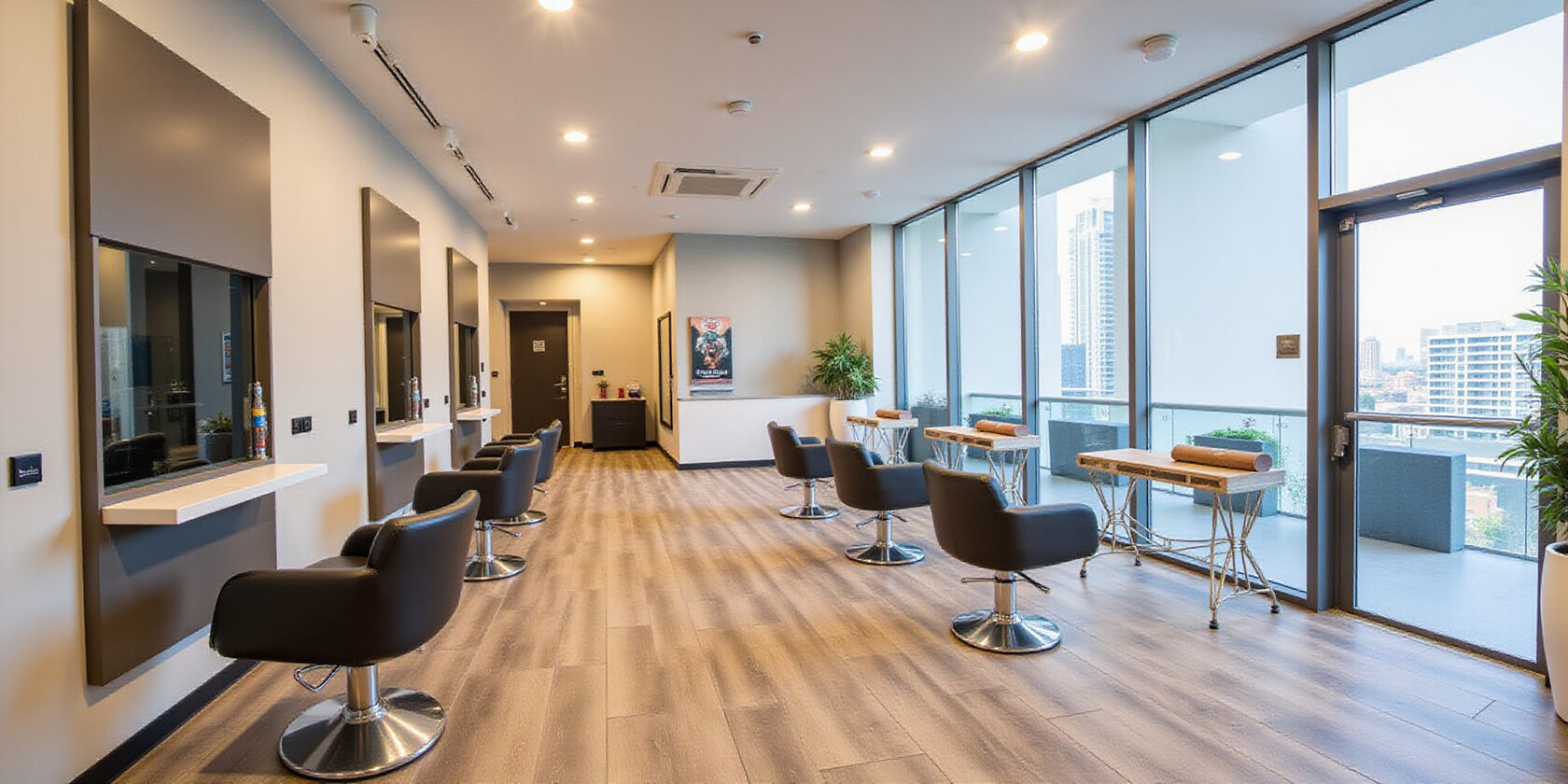
How to open a salon in Dubai?
Dubai’s salon market is booming, with a projected 12 % annual growth by 2026. We’re standing on the edge of a goldmine where beauty meets business. Imagine a city where every corner glows with style and opportunity. Ready to dive into the numbers that make this sector shine?
The Dubai Department of Economic Development (DED) reports that the beauty industry generated AED 1.2 billion last year, a 12 % rise from 2023. What does that mean for us? It translates to roughly 3,000 new salons each year, each competing for a slice of the market pie. And we’re not just talking about hair; it’s about makeup, spa, and men’s grooming too.
Why Dubai? Because the city’s regulatory framework is as smooth as a freshly shaved head. We can set up a mainland or free‑zone or JAFZA license in less than two months, compared to the 4‑6 month average elsewhere. The cost? A trade license ranges from AED 10,000 to AED 18,000, plus a modest office lease. That’s a fraction of what you’d pay in London or New York.
Our roadmap cuts through bureaucracy like a razor blade. We’ll walk through the three main business structures—mainland, free‑zone, and offshore—highlighting pros and cons. Then we’ll unpack the required documents: passports, NOC, shareholder agreements, and activity codes. Finally, we’ll chart the licensing workflow from name reservation to final approval, so you can focus on styling clients, not paperwork.
With this guide, you’ll know how to open a salon in Dubai step by step, backed by real data and official sources. We’ll also give you quick tips on financing, visa sponsorship, and post‑licensing compliance. Ready to turn that golden opportunity into a thriving salon? Let’s get started.
Did you know that Dubai’s salon market is projected to hit AED 2.06 billion by 2028? That’s a CAGR of 12 % over five years. Below is a quick snapshot of the sector’s growth trajectory:
| Year | Revenue (AED bn) | Growth % |
|---|---|---|
| 2023 | 1.20 | 0 |
| 2024 | 1.34 | 12 |
| 2025 | 1.50 | 12 |
| 2026 | 1.68 | 12 |
| 2027 | 1.86 | 12 |
| 2028 | 2.06 | 12 |
These numbers show that the market is not just stable but accelerating, offering ample room for new entrants.
Our next section will dive deeper into the licensing mechanics, but before that, remember: the first step is choosing the right legal structure. Think of it as picking the foundation for your salon’s success. Let’s lock in that foundation and move forward.
Choosing the right legal structure feels like picking the right haircut for a salon—precision matters.
We’ll compare Mainland, Free‑Zone, and Offshore setups, showing ownership rules, local partner needs, and tax perks.
This guide uses real‑world examples, DED statutes, and our own UAE corporate law experience.
Ready to map your salon’s legal DNA? Let’s dive in.
Legal Structures Overview
The Dubai business setup guide breaks down three main frameworks:
| Structure | Ownership | Local Partner | Market Access | Tax Benefit |
|---|---|---|---|---|
| Mainland | 100% foreign | Required for certain activities | Unlimited UAE market | Possible corporate tax after 2025 |
| Free‑Zone | 100% foreign | None | Restricted to zone or export | 0% corporate tax |
| Offshore | 100% foreign | None | No UAE presence | 0% corporate tax |
Why the choice matters
- Mainland lets you open branches city‑wide but needs a UAE national sponsor.
- Free‑Zone offers 100% ownership and tax breaks, yet you can’t trade inside Dubai without a local distributor.
- Offshore is ideal for holding assets, not for operating a salon.
Do you want to serve the bustling Dubai market or a niche clientele in a free‑zone mall? The answer shapes your entire license path.
Decision Matrix
| Criterion | Mainland | Free‑Zone | Offshore |
|---|---|---|---|
| 100% ownership | ✔ | ✔ | ✔ |
| Local partner needed | ✖ | ✖ | ✖ |
| Market access | ✔ | ✖ | ✖ |
| Tax rate | 0‑30% | 0% | 0% |
| Setup cost | Medium | Low | Very low |
Tip: If you plan to open a salon in a mall like Jumeirah Beach, a Free‑Zone company can be cheaper, but you’ll need a local distributor for city sales.
Real‑world example
A salon owner in Dubai Marina chose a Mainland license, partnered with a UAE national, and paid AED 12 000 for the trade license. They gained full market access and later opened a second outlet in Abu Dhabi.
Quick comparison
- Mainland: Full control, higher scrutiny, potential for future expansion.
- Free‑Zone: Faster setup, tax‑free, limited local trade.
- Offshore: Low cost, no physical presence.
Licensing Workflow (All Structures)
- Name Reservation – Submit a proposed trade name to the DED or the relevant free‑zone authority.
- Initial Approval – Receive a “Letter of Approval” or “Initial Approval” from the DED or free‑zone office.
- Pre‑licensing Documents – Gather passport copies, NOC from sponsor/employer, shareholder agreements, and activity list.
- Capital Deposit – Open a UAE bank account and deposit the required share capital (if applicable).
- NOC & Sponsor – For Mainland, obtain a No‑Objection Certificate (NOC) from your current employer or sponsor.
- Trade License Application – Submit the application along with all documents to the DED or free‑zone portal.
- Payment & Issuance – Pay the license fee and receive the trade license certificate.
- Post‑Licensing Compliance – Register for VAT (if turnover > AED 375 000), obtain visas, and renew the license annually.
Free‑Zone Specifics
- DMCC – Offers a 100% ownership free‑zone with a streamlined online application.
- JAFZA – Provides sector‑specific licenses for beauty and wellness businesses and a dedicated salon package.
Visit the official portals for the latest requirements:
- DED: https://ded.ae
- DMCC: https://www.dmcc.ae
- JAFZA: https://www.jafza.gov.ae
Financing Options
| Option | Typical Source | Notes |
|---|---|---|
| Bank Loan | UAE banks (e.g., Emirates NBD, Abu Dhabi Commercial Bank) | Requires personal guarantees and a solid business plan |
| Investor Funding | Angel investors or venture capital | Equity stake, often in exchange for strategic guidance |
| Government Grants | Dubai SME Fund, UAE Ministry of Economy | Competitive application, limited to certain sectors |
Post‑Licensing Compliance Checklist
- Annual license renewal with the DED or free‑zone authority.
- VAT registration if applicable.
- Employee visas and labor card renewals.
- Annual audit (for Mainland entities).
- Update share capital or ownership structure with the DED.
Visual Flowchart (Textual)
Name Reservation → Initial Approval → Pre‑Licensing Documents → Capital Deposit → NOC/Sponsor → Trade License Application → Payment → Issuance → Post‑Licensing Compliance
The next section will walk you through the licensing workflow for each structure, so stay tuned.
Gathering Essential Pre‑Licensing Documents
Here’s a practical checklist of every paper you’ll need before you can apply for a trade license to open a salon in Dubai. We’ll explain why each one matters, where you can get it, and toss in a few quick tips to sidestep common snags.
Why Every Paper Matters
- Passport copies confirm identity and residency status; they are the foundation of the setup process.
- No‑Objection Certificate (NOC) from a current employer or sponsor proves you are free to start a new venture.
- Shareholder agreement defines ownership shares, profit splits, and dispute resolution—essential for company structure.
- Proof of address (utility bill or lease) anchors your business to a physical location, a prerequisite for visas and banking.
- Activity code approval (usually 930203 for a ladies’ salon) signals regulatory compliance and ensures the DED recognises your business line.
- DED activity list – a comprehensive list of activity codes approved by the Dubai Department of Economic Development. View the list at DED Activity List.
Where to Grab Them
| Document | Source (with link) | Tips |
|---|---|---|
| Passport | Passport Office | Keep the original handy; a photocopy must be legible. |
| NOC | DED Portal – NOC section | Ask for a stamped, signed letter; a quick email can save days. |
| Shareholder agreement | Notary public | Draft with a lawyer familiar with UAE company law. |
| Proof of address | Utility provider | Use the latest bill; avoid older ones that may have expired. |
| Activity code | DED Portal – Activity Codes | Double‑check the code before submission to avoid re‑work. |
Common Pitfalls & How to Dodge Them
- Missing signatures: Always double‑check that every page is signed and dated. A single missing line can halt the entire process.
- Expired passports: Ensure validity for at least six months beyond the expected license date.
- Incorrect activity code: A wrong code leads to a denial—verify with the DED list.
- Incomplete NOC: Some employers ask for a “no objection” but forget the release clause; request the full form.
Sample Document Bundle
Below is a snapshot of a typical bundle we use for a mainland salon setup. Each item is labeled, stamped, and ready for upload.
For more information, visit the Dubai Department of Economic Development portal at DED and the free‑zone authorities such as DMCC (DMCC) and JAFZA (JAFZA).
Step‑by‑Step Licensing Workflow
What is a NOC?
A No‑Objection Certificate (NOC) is a document issued by your current employer or sponsor stating that they have no objection to you starting a new business. It’s required for mainland companies that involve a local partner or sponsor.
What is a DED activity list?
The Dubai Department of Economic Development (DED) publishes an activity list that categorises business activities into codes (for example, 930203 for retail). You must use the correct code when applying for a license.
1. Mainland (DED)
- Name Reservation – Submit up to three options; AED 200 each. Processing: 24–48 hrs.
- Initial Approval – Provide business plan, activity code 930203, shareholder details. Fee: AED 500–1 000; Time: 3–5 days.
- NOC & Sponsor Clearance – Secure a No‑Objection Certificate from your current employer and draft a local‑partner agreement.
- Trade License Payment – Pay AED 10 000–15 000 annually, depending on location and scope.
- Issuance & Premises – After payment, receive the license and finalize a lease. Turnaround: 1–2 weeks.
2. Free‑Zone (DMCC & JAFZA)
| Step | Action | Cost | Time |
|---|---|---|---|
| Name Reservation | 3 name options | AED 150–300 | 24 hrs |
| Initial Approval | Activity code + shareholders | AED 500–1 200 | 3–5 days |
| Office Lease | Flexi‑office or dedicated | Variable | 1–2 weeks |
| License Payment | Annual fee | AED 10 000–18 000 | 1–2 weeks |
| Issuance | Final approval | — | 1–2 weeks |
3. Key Contacts
- Dubai DED – Main portal for mainland licenses: https://ded.ae
- DMCC – Fast‑track for free‑zone setups: https://dmcc.ae
- JAFZA – Ideal for high‑traffic retail locations: https://www.jafza.com
- Dubai Municipality – For municipal and health approvals: https://www.dm.gov.ae
4. Typical Delays
| Stage | Common Bottleneck | Fix |
|---|---|---|
| NOC | Employer paperwork | Draft a formal request letter early |
| Lease | Space availability | Use a flex‑office provider |
| Municipal | Inspection backlog | Submit all certificates together |
5. Visual Flowchart
Idea → Structure → Docs → Name → Approval → NOC → Payment → License → Premises → Launch
Every arrow is a decision point where you can speed things up by having all documents pre‑checked.
6. Financing Options
- Bank Loans – Many UAE banks offer business loans with 5–10 % interest rates and 3–5 year terms.
- Investor Funding – Angel investors or venture capital firms often invest in salons with a clear growth plan.
- Government Grants – The Dubai SME program provides grants up to AED 50 000 for qualifying start‑ups.
7. Post‑Licensing Compliance Checklist
- Renewal – Trade license renewals are due annually; submit renewal application 30 days before expiry.
- Audit – Conduct an internal audit of financial records annually; prepare for external audits if required.
- Visa Sponsorship – Register employees’ work visas with the Ministry of Labor and update sponsorship records.
8. Quick Tips
- Reserve your name early; popular names get snatched fast.
- Bundle NOC and lease agreements to reduce separate approvals.
- Use a local service agent in free‑zones to sidestep sponsor requirements.
- Track deadlines in a shared calendar to avoid last‑minute surprises.
With this roadmap, you’ll move from concept to grand opening with confidence, knowing each step is measured and manageable.
Dubai’s salon scene has sprouted across the city like wildflowers after a rainstorm.
But before you pick a spot, you’ll have to wrestle with free‑zone rules that feel more like a paperwork maze than a breeze.
We’ll unpack DMCC and JAFZA’s quirks, the 930203 activity code, and why municipal checks matter.
Ever wondered why a health department stamp can delay your grand opening?
Let’s dive in and turn those hurdles into stepping stones.
Navigating Free‑Zone Specifics and Sector Licenses
DMCC vs. JAFZA: Cost & Compliance Snapshot
| Feature | DMCC | JAFZA |
|---|---|---|
| Initial License Fee | AED 12,000 | AED 10,000 |
| Annual Renewal | AED 15,000 | AED 13,000 |
| Municipal Approval | Required | Optional (if within free‑zone limits) |
| Health Dept. Check | Mandatory for salons | Mandatory |
| Total First‑Year Cost | AED 27,000 | AED 23,000 |
Tip: The UAE trade license cost difference can swing your budget by a few thousand AED.
Activity Code 930203: What It Means for Your Salon
The 930203 code classifies a Ladies’ Salon under professional services. It triggers:
- Municipal approval from Dubai Municipality’s Beauty & Personal Care department.
- Health department inspection to certify hygiene standards.
- Sector‑specific insurance covering salon equipment and client liability.
If you plan a men’s grooming centre, switch to 930204 and repeat the checks.
Municipal & Health Checks
Municipal approval isn’t just a formality; it’s a safety net. The health department will:
- Inspect the salon’s sanitation area.
- Verify product storage meets chemical handling guidelines.
- Issue a stamp that must accompany the trade license.
Skipping this step can lead to fines of AED 5,000–10,000 and a forced shutdown.
Real‑World Case: Maya’s Salon in DMCC
Maya, a former hairstylist, opened a boutique salon in DMCC. She:
- Submitted the 930203 application with a detailed business plan.
- Paid AED 12,000 for the initial license and AED 15,000 for renewal.
- Got municipal clearance in 10 days after a quick on‑site health check.
- Launched with a 3‑month marketing blitz, attracting 150 clients in the first month.
Her total first‑year cost was AED 27,000, matching the table above.
Quick Checklist for Free‑Zone Setup
- Register a company name (DMCC/JAFZA) – 24 hrs.
- File the 930203 activity code with supporting docs.
- Secure municipal approval – 5‑7 business days.
- Arrange a health department inspection – 3‑5 days.
- Pay the trade license fee and renewal.
- Upload the health stamp to the free‑zone portal.
Follow these steps, and you’ll transform paperwork into a passport for success.
Useful Links
- Dubai Department of Economic Development: https://ded.ae
- DMCC: https://dmcc.ae
- JAFZA: https://www.jafza.ae
How to open a salon in Dubai
Opening a salon in Dubai feels like stepping onto a runway—every detail matters.
How do you open a salon in Dubai? The financing can be the runway’s fuel, but only if you know the right stops.
We’ll map the main fuel stations: bank loans, investors, grants, and trade credit.
Ready to refuel your venture with concrete numbers and real bank names?
Top banks in Dubai offer salon‑specific loans ranging from AED 50,000 to AED 1,000,000.
Emirates NBD’s Beauty Loan program caps at AED 500,000 and requires a 20 % down payment.
Dubai Bank’s Small Business Line gives up to AED 750,000 with a 12‑month grace period.
Collateral can be a lease contract or a personal guarantee, depending on your credit score.
Equity investors often look for a 20–30 % stake in exchange for capital.
An angel in Dubai invested AED 200,000 and saw the salon grow 150 % in two years.
Wamda Ventures targets innovative beauty tech; they offer up to AED 1.5 million.
Pitch decks should highlight foot traffic, brand differentiation, and projected EBITDA within 12 months.
Government grants through the Dubai SME Programme provide up to AED 50,000 for innovation projects.
Eligibility requires a registered SME, a viable business plan, and compliance with UAE Vision 2025.
Applications are reviewed quarterly; the last round closed on 30 September 2024.
Successful applicants receive not only cash but also mentorship from Dubai Future Accelerators.
Trade credit from suppliers can cover up to 30 % of your inventory costs.
Negotiating longer payment terms—60 to 90 days—reduces cash burn during the first six months.
Building a strong supplier relationship is like cultivating a garden; consistency yields blooms.
Financing Snapshot
| Funding Source | Typical Amount | Key Requirement |
|---|---|---|
| Bank Loan | AED 50,000–1,000,000 | Collateral or lease |
| Investor | AED 200,000–1.5 million | Equity stake 20–30 % |
| Grant | AED 5,000–50,000 | SME registration, business plan |
| Trade Credit | Up to 30 % of inventory | Supplier agreement |
Begin with a cash flow forecast; lenders love numbers that prove repayment before the first haircut.
Keep your credit score above 750 to secure the best interest rates.
Use the Dubai SME portal to submit grant applications and track status: https://www.dubaisme.com/.
Remember, each funding source has its own timeline—plan accordingly.
For more information on licensing, visit the Dubai Department of Economic Development portal (https://ded.ae/) and the free‑zone authority sites such as DMCC (https://www.dmcc.ae/) and JAFZA (https://www.jafza.gov.ae/).
Next, we’ll dive into the post‑licensing compliance checklist that keeps your salon running smoothly.
Post‑Licensing Compliance and Growth Roadmap
This roadmap is part of our comprehensive guide on how to open a salon in Dubai. Once you’ve secured your trade license, staying compliant and planning for expansion become the keys to turning a startup into a thriving brand.
Industry Terms Defined
- NOC (No Objection Certificate) – A document issued by a sponsor or former employer confirming that they have no objection to you setting up a business in the UAE.
- DED Activity List – The list of permissible business activities published by the Dubai Department of Economic Development (DED). Your chosen activity code must be listed here to obtain the trade license.
Direct Resources
- Dubai Department of Economic Development (DED)
- Dubai Multi Commodities Centre (DMCC)
- Jebel Ali Free Zone Authority (JAFZA)
Visual Flowchart – Post‑Licensing Workflow
Name Reservation → Initial Approval → Payment → License Issuance → Post‑Licensing Compliance
Post‑Licensing Compliance Checklist
- Annual Trade License Renewal – Keep the badge fresh.
- Municipal & Health Inspections – Schedule them before the audit.
- Employee Visa Sponsorship – Renew or extend visas on time.
- Tax Filing – File VAT and corporate tax, if applicable.
- Financial Audit – Conduct a yearly audit for credibility.
- Lease Renewal – Lock in the space before the rent hike.
Timeline & Next Steps
- Month 1‑3 – Submit renewal application and secure visa extensions.
- Month 4‑6 – Complete municipal inspection and audit.
- Month 7‑9 – File tax returns and review financial statements.
- Month 10‑12 – Plan expansion – identify a new location or add a premium service line.
Scaling the Salon
- Location Expansion – Use the same legal structure, just duplicate the setup process.
- Service Diversification – Add spa treatments or product lines; each requires a new activity code.
- Digital Growth – Launch an online booking app – this opens a new revenue stream.
- Staff Upskilling – Offer certifications to boost service quality and customer loyalty.
Take Action
Apply this roadmap now: schedule your renewal, line up your visa paperwork, and draft a one‑page expansion plan. If you need a hands‑on partner, reach out to a licensed business consultant – we’ll help you stay compliant and grow faster than the competition.
FAQ
How long does a Dubai trade license take?
The processing time varies by business structure and activity. Typically, it takes 3–5 business days for mainland licenses and 5–10 days for free‑zone licenses after all documents are submitted.
What is required for a free‑zone license renewal?
You must submit a renewal application, pay the renewal fee, and provide updated documents such as a passport copy and a current activity list.
Can I expand my salon to another location while keeping the same legal entity?
Yes, you can open additional branches under the same legal entity, but each location requires its own trade license and activity code.
Where can I find the DED activity list for my salon?
The DED activity list is available on the DED website under the “Business Activities” section.