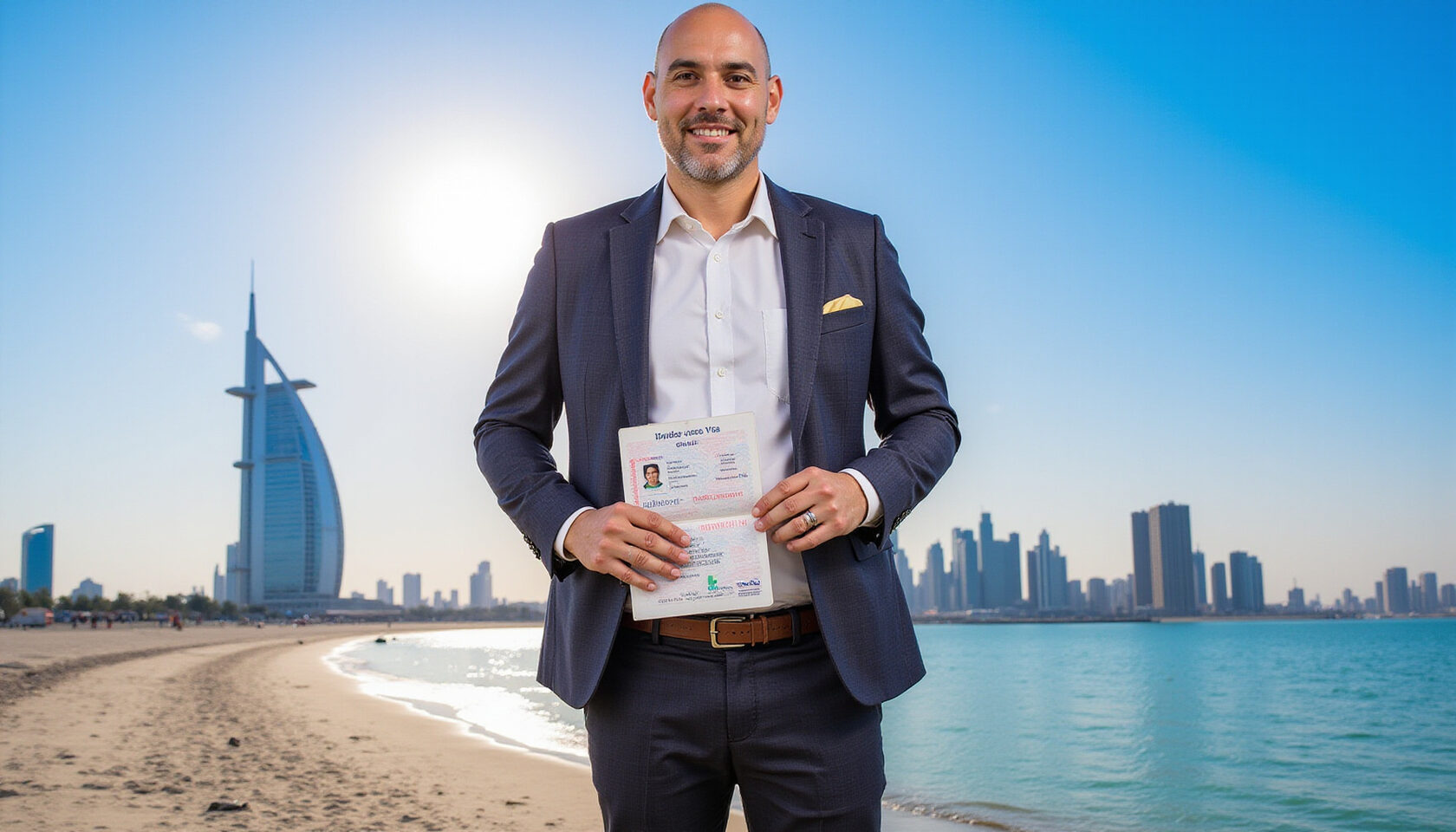
A recent expatriate, Maya, landed a UAE residence visa in just 12 days, thanks to a clear roadmap she found online. She was stunned to learn that the same speed applies to anyone who follows the latest MOI updates and the Federal Law No. 1 of 2018.
The stakes are high: world‑class healthcare, a tax‑friendly business environment, and a gateway to the Gulf’s booming markets. Every expat who wants to build a future in Dubai or Abu Dhabi now knows that securing a residence visa is the first, and often the most crucial, step.
Our guide will demystify the process. We’ll cite the exact clauses of the 2018 law, pull in the newest MOI circulars, and break down the paperwork into bite‑size actions that save time and money. By the end of this section, you’ll see how to align your documents with legal requirements, avoid common pitfalls, and speed up approval.
We’ll start with the eligibility matrix, then walk through the application workflow, highlight the latest fee schedule, and finish with a quick‑reference checklist. Think of this as your personal playbook for a smooth visa journey.
We’re not just talking theory; we’re handing you a proven strategy that turns a complex bureaucracy into a manageable series of steps. Ready to dive deeper? The next section will unpack the different visa types and the exact documents each needs. Stay tuned for a detailed, step‑by‑step playbook that turns the UAE residence visa from a mystery into a clear, actionable goal.
What Is a UAE Residence Visa?
A UAE residence visa lets you live, work, and study in the Emirates beyond the 30‑day limit of a tourist or visit visa. It’s a legal passport stamped in your passport that ties you to a sponsor—your employer, a family member, or a business investment. The 2018 Federal Law No. 1 and its amendments define the visa as a temporary residence granted under Article 5, with the Ministry of Interior (MOI) and Federal Authority for Identity and Citizenship (ICA) as the issuing bodies.
Unlike a tourist visa, which is a short‑term entry pass, a residence visa gives you longer stay (up to 5 years), work eligibility, family sponsorship, and access to public services such as healthcare, education, and banking. It also allows you to renew without leaving the UAE, provided you meet the medical and financial criteria.
| Visa Type | Validity | Renewal | Key Condition |
|---|---|---|---|
| Employment | 3–5 yrs | Automatic if employer renews | Sponsor’s employment contract |
| Investor | 5 yrs | Automatic with investment proof | Minimum investment threshold |
| Family | 3–5 yrs | Automatic with sponsor’s renewal | Sponsor’s residency status |
| Student | 6 mos–2 yrs | Automatic with enrollment | Valid enrollment letter |
| Retirement | 5 yrs | Automatic with proof of pension | Minimum pension amount |
The table helps you reutrn to the key differences quickly. MOI guidelines state that a residence visa must include a valid health insurance plan and a biometric scan. ICA confirms the visa stamp and issues the Emirates ID, which is required for all public service access. These legal anchors ensure that the visa is not just a travel document but a full‑spectrum residency right.
Types of UAE Residence Visas
When you plan to live in the UAE, you’ll need a residence visa that matches your purpose. Below, we break down the five main categories, the key documents, and how long each typically takes to process.
Employment Visa
A local employer sponsors you. You need a valid employment contract, a labor card, and a medical test. Processing usually takes 10‑15 business days if all paperwork is clean. For example, Ahmed, a software engineer, received his visa in 12 days after his employer submitted the labor card.
Investor Visa
The 2023 reform lets entrepreneurs secure a 5‑year visa by investing a minimum of AED 1 million in a UAE‑registered company or a real‑estate project. A startup founder, Leila, used this route and now enjoys a renewable 5‑year status. Proof of investment, a business plan, and a sponsor letter are mandatory.
Family Sponsorship Visa
A UAE national or a long‑term resident can sponsor spouses, children, and parents. The sponsor must provide a salary proof of AED 15 000/month and health insurance. A typical processing time is 7‑10 days. Mohamed, a national employee, recently sponsored his wife and two kids; the paperwork was straightforward.
Student Visa
Enrolment in a UAE university is the gateway. You need an admission letter, proof of funds (AED 10 000/month), and a health insurance policy. Processing takes about 10 days. Sofia, a recent graduate, got her student visa in 9 days.
Retirement Visa
Designed for retirees over 55, it requires a minimum AED 1 million in savings or a fixed‑income plan. The visa is valid for 3 years and can be renewed. Health insurance is mandatory.
Comparative Snapshot
| Visa Type | Financial Threshold | Sponsor | Renewal Period |
|---|---|---|---|
| Employment | None (salary proof) | Employer | 1 year (extendable) |
| Investor | AED 1 M investment | Investor | 5 years |
| Family | None (salary proof) | UAE national/long‑term resident | 1 year |
| Student | AED 10 K/month | University | 1 year |
| Retirement | AED 1 M savings | Applicant | 3 years |
Recent Updates
- Investor Visa 5‑Year Extension (2023): Now available to all qualifying investors, simplifying renewals.
- Retirement Visa 3‑Year Renewal: No extra investment needed; just proof of ongoing savings.
For official guidelines, visit the MOI website (https://www.moi.gov.ae) and the ICA website (https://www.ica.gov.ae).
The next section will walk you through the step‑by‑step application flow and the critical documents you must gather before you submit.
Eligibility Criteria for Each Category: Documents, Financial Thresholds, and Health Insurance
When you’re chasing a UAE residence visa, the paperwork can feel like a maze. We’ve distilled the maze into a clear, bite‑size checklist that covers documents, financial thresholds, and health insurance for every visa type.
1. Employment Visa
- Documents: Valid passport, sponsor’s letter, Emirates ID, medical test results, and a copy of the employment contract.
- Financial threshold: No minimum; the employer must meet the UAE’s labor regulations.
- Health insurance: Mandatory coverage for the employee and dependents, minimum AED 3,000 per year per person.
2. Investor Visa
- Documents: Passport, investor sponsorship letter, proof of investment (bank statement or property title), and a business plan.
- Financial threshold: Minimum AED 2 million in a UAE‑registered company or a real‑estate investment of at least AED 2 million.
- Health insurance: Minimum AED 5,000 per year per person, with a 12‑month coverage period.
3. Retirement Visa
- Documents: Passport, sponsor letter, retirement proof (pension or savings), and a medical exam.
- Financial threshold: Minimum AED 1 million in savings or a pension of AED 50,000 per month.
- Health insurance: Minimum AED 4,000 per year per person, and must be valid for the entire 5‑year stay.
4. Family Sponsorship Visa
- Documents: Passport, sponsor’s letter, marriage certificate or birth certificates for children, and proof of income.
- Financial threshold: Sponsor must earn a minimum of AED 12,000 per month.
- Health insurance: Minimum AED 2,500 per person per year.
5. Student Visa
- Documents: Passport, admission letter, sponsor’s letter, and proof of tuition payment.
- Financial threshold: No explicit minimum, but tuition and living costs must be covered.
- Health insurance: Minimum AED 3,000 per year per student.
Expert Insight: “The 2024 policy shift now requires all visa holders to carry health insurance that covers both inpatient and outpatient care, not just emergency services,” says Ahmed Al‑Mansoor, licensed UAE immigration lawyer.
These checklists are living documents. Keep an eye on the Ministry of Interior updates, as thresholds and insurance minimums can shift quarterly.
The next section will walk you through the step‑by‑step application process, turning these requirements into a practical roadmap.
UAE Visa Application Steps: The Clear Path
We’ve broken down the entire journey into a simple, numbered flow so you can see exactly where to focus your energy.
1️⃣ Obtain Employer or Sponsor Approval – The first gatekeeper is your employer or a licensed sponsor. They must issue a sponsor letter that confirms your role, salary, and the duration of your stay. This document is the key that unlocks the next stages.
2️⃣ Submit Medical Tests & Emirates ID Application – Once you have the sponsor letter, book an appointment with a UAE‑approved medical center. The tests (blood work, chest X‑ray, COVID‑19 PCR) must be completed within 30 days of your arrival. Simultaneously, apply for an Emirates ID; the ID card will be used for biometric capture and is mandatory for all visa holders.
3️⃣ Receive MOI Pre‑Approval – After the medical results clear, your sponsor forwards the package to the Ministry of Interior (MOI). The MOI reviews the dossier and issues a pre‑approval stamp. Current processing times average 3–5 business days, but rush options are available for an extra fee.
4️⃣ Complete ICA Biometric Capture – With pre‑approval in hand, schedule a biometric appointment at an ICA center. Your fingerprints, iris scan, and a digital photograph are captured. We recommend booking early in the week; weekends are often full, and delays can push the final stamp.
5️⃣ Receive Visa Stamp in Passport – After ICA processes your biometrics, the visa is stamped in your passport. The typical turnaround is 1–2 business days. Make sure your passport has at least 90 days of validity and two blank pages.
Real‑World Case: Student Visa Timeline
Take Ahmed, a 23‑year‑old engineering student. He secured a university offer, got his sponsor letter, and completed medical tests in 7 days. MOI pre‑approval arrived in 4 days. He booked ICA capture on Monday, received his visa stamp by Thursday, and was ready to enroll by Friday. Total time: 15 days.
Bottlenecks & How to Avoid Them
- Late Sponsor Letter – Verify the sponsor’s registration with the UAE Ministry of Labor before signing.
- Medical Test Delays – Use a center that offers same‑day results; keep a copy of the test report ready for submission.
- EMirates ID Processing Lag – Apply for the ID at the same time as medical tests; the ID office often processes applications faster when they’re bundled.
- ICA Appointment Backlogs – Book 2–3 weeks in advance and choose a less busy center (e.g., Al Ain or Ajman) if possible.
- Passport Validity Issues – Check the 90‑day rule; many applicants overlook this and lose precious days.
By anticipating these snags and planning ahead, you can keep the process moving smoothly.
The next section will dive into the cost breakdown and how to budget for each step. Stay tuned.
How much does a UAE residence visa cost?
Current fees (AED) – as listed on the Ministry of Interior (MOI) fee schedule (subject to quarterly updates):
- Employment visa application fee: 1,500
- Health insurance: 2,000
- Emirates ID issuance: 500
- Visa stamping: 300
- Renewal fee: 1,200
Hidden or additional costs
These are common extra charges that applicants may incur:
- Medical testing (200–400 AED)
- Certified translations (100–200 AED)
- Courier and courier insurance (50–100 AED)
- Optional biometric enrollment (150 AED)
- Late‑processing or rush fees (up to 500 AED)
In 2024 the MOI reduced the employment visa application fee from 1,800 to 1,500 AED. The health‑insurance requirement has increased to 2,000 AED.
Tips to keep costs predictable
- Lock in a health plan early.
- Use certified translators to avoid extra translation fees.
- Schedule all medical tests before your sponsor’s appointment.
- Avoid last‑minute rushes that trigger extra charges.
Quick cost calculator (application only)
| Item | Fee (AED) |
|---|---|
| Employment visa application | 1,500 |
| Health insurance | 2,000 |
| Emirates ID issuance | 500 |
| Visa stamping | 300 |
| Subtotal | 4,300 |
Renewal fee – 1,200 AED (paid separately when the visa expires).
Always review the official MOI pricing page before submitting; fees are subject to quarterly updates that can affect your budget.
Common Pitfalls, Renewal, and Expiry: How to Stay Compliant
When the visa clock starts ticking, the most common mistake is assuming paperwork is automatic. We’ve seen applicants forget that health insurance must be current, that sponsor details must match the latest employer records, and that a missing biometric scan can halt the entire process. Even a simple typo in the sponsor’s name can trigger a delay that costs weeks.
Common Pitfalls to Avoid
- Outdated Health Insurance – Verify policy validity before stamping.
- Incorrect Sponsor Information – Cross‑check employer ID and sponsor name.
- Missing Documents – A single missing passport photo or visa copy can stall processing.
- Late Medical Tests – Ensure tests are completed within the 30‑day window.
- Ignoring Expiration Notices – Pay attention to the 90‑day grace period after expiry.
Renewal Process: When & What
The renewal window opens 30 days before expiry. Apply at least 45 days prior to avoid overlap. Required documents include:
1. Current passport copy.
2. Latest Emirates ID.
3. Updated health insurance certificate.
4. Sponsor’s latest employment contract.
5. Recent biometric photo.
Processing typically takes 5–10 business days. Pay the renewal fee online via the MOI portal and keep the receipt for proof.
Renewal Checklist
- [ ] Confirm expiry date.
- [ ] Gather all documents.
- [ ] Verify health insurance coverage.
- [ ] Upload photos and scans.
- [ ] Submit application.
- [ ] Pay fee and save receipt.
- [ ] Monitor status every 3 days.
Case Study: Ahmed’s On‑Time Renewal
Ahmed, a software engineer, noticed his visa was due in 25 days. He collected documents, double‑checked the sponsor’s name, and submitted the renewal 35 days early. Within 7 days, the stamp appeared, and he avoided a costly 30‑day grace‑period penalty. His experience highlights the importance of early preparation.
Tips to Dodge Expiration Penalties
- Set calendar alerts 45 days before expiry.
- Keep a digital folder with all renewal documents.
- Use the MOI app to track status in real time.
- If you’re traveling, apply for an extension through the e‑visa portal.
- Always keep an emergency copy of the renewal receipt.
What’s your next step in keeping your UAE residence visa compliant?
Ready to turn plans into passports? The next step is simple: gather the right documents, book a lawyer, and hit the submit button.
Download Your Free Visa Checklist
Grab our downloadable PDF checklist that lists every document and step you need for each visa type. It’s the one‑stop reference that keeps you from missing a single requirement.
Book a Consultation with a Licensed UAE Immigration Lawyer
Having a seasoned professional review your case can cut delays and avoid costly mistakes. Schedule a one‑hour session and get personalized advice tailored to your visa category.
Apply Directly for Your Visa
Use the official application portals below to submit your paperwork for the visa you need:
- Employment Visa – Apply for Employment Visa
- Investor Visa – Apply for Investor Visa
- Family Sponsorship Visa – Apply for Family Visa
- Student Visa – Apply for Student Visa
- Retirement Visa – Apply for Retirement Visa
Dive Deeper with Related Articles
Want to explore more? Check out our in‑depth guides:
- UAE Work Permits
- Investment Opportunities in the UAE
Official Sources
For the latest rules and updates, refer to the Ministry of Interior and Federal Authority for Identity and Citizenship:
- Ministry of Interior: https://www.moi.gov.ae
- Federal Authority for Identity and Citizenship: https://www.ica.gov.ae
Final Thought
A UAE residence visa opens doors to career growth, family stability, and a vibrant lifestyle. With our checklist, expert guidance, and direct application links, you’re equipped to navigate the process confidently. Remember, the right preparation today means a smoother tomorrow. Let’s make your UAE journey a success together.